

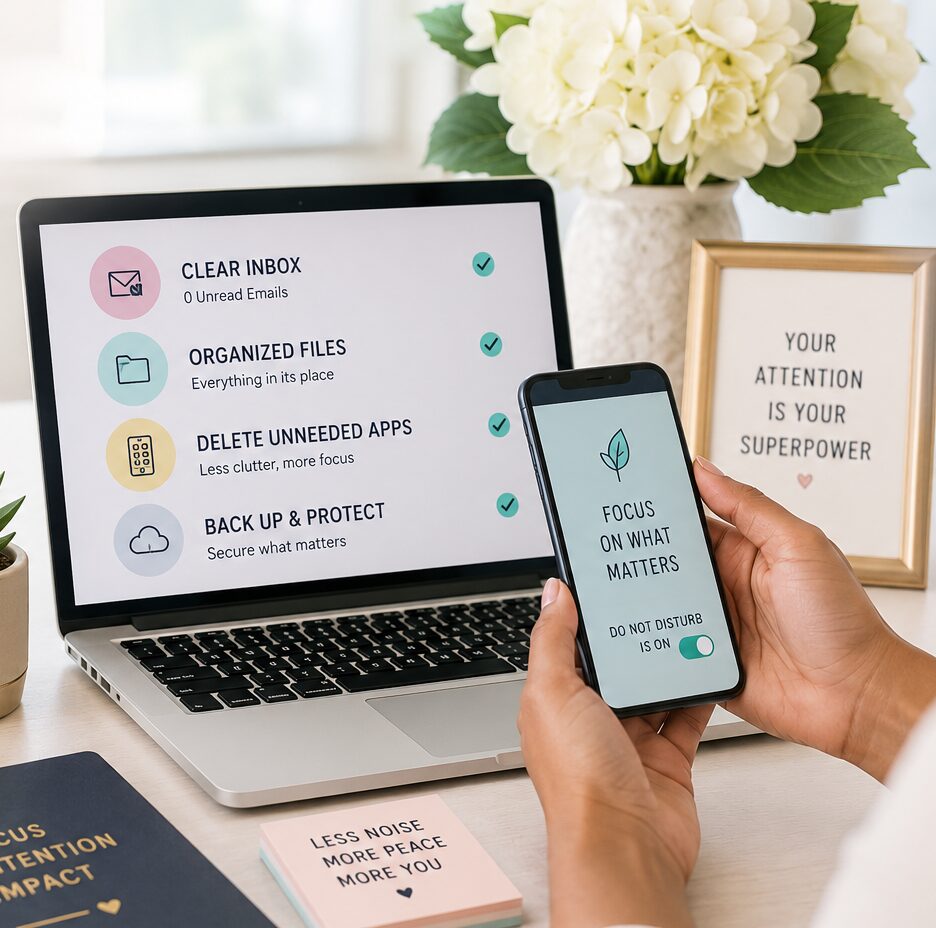
Most of us wouldn’t tolerate a kitchen counter covered in unopened mail, old receipts and random paperwork for months at a time. Yet many of us carry that same kind of clutter every day, only it’s hidden inside our phones, laptops and tablets.
Thousands of unread emails. Hundreds of screenshots we’ll never look at again. Apps we downloaded years ago but haven’t opened since. Notifications arriving every few minutes. Photos buried among duplicates, blurry images and accidental pocket pictures.
Digital clutter may not take up physical space, but it occupies mental space. It creates distractions, slows productivity and can quietly increase stress without us even realizing it.
Just as organizing your home can create a sense of calm, cleaning up your digital life can make everyday tasks easier while helping you feel more focused and in control.
Information overload is real
The average person consumes an enormous amount of information every day through emails, text messages, social media, streaming platforms, news alerts and workplace communication tools.
Our brains were never designed to process a constant stream of notifications.
Every vibration, banner and badge competes for our attention, making it more difficult to concentrate on meaningful work or simply enjoy uninterrupted moments.
Digital decluttering isn’t about abandoning technology. It’s about becoming more intentional in how technology serves your life instead of allowing it to control your attention.
Start with your inbox
For many people, email is the largest source of digital stress.
An inbox overflowing with thousands of unread messages creates the feeling that you’re always behind, even when many of those emails are newsletters, promotions or notifications you’ll never read.
Begin by unsubscribing from emails you no longer find useful. Create folders for frequently referenced information, and archive messages that no longer require action.
If reaching “Inbox Zero” feels unrealistic, don’t let perfection become the enemy of progress. Even reducing your inbox by a few hundred emails can make it easier to find what actually matters.
Delete the apps that no longer serve you
Take an honest look at your phone.
If an app hasn’t been opened in months, ask yourself why it’s still taking up space and competing for your attention.
Many apps continue sending notifications long after they’ve stopped providing value.
Removing unnecessary apps doesn’t just free storage. It reduces temptation, minimizes distractions and simplifies your daily routines.
The goal isn’t to have the fewest apps possible. It’s to keep the ones that genuinely improve your life.
Organize your photos
For many of us, our phones have become our primary photo albums.
Unfortunately, they’re also filled with duplicate pictures, screenshots, blurry images, shopping comparisons and accidental photos of the inside of a purse or the floor. Human beings have somehow managed to create digital junk drawers, proving that clutter simply evolves with technology.
Set aside time each month to delete unnecessary images, organize important photos into albums and back up memories you don’t want to lose.
Future you will be grateful when searching for family vacation photos doesn’t require scrolling past 87 screenshots of recipes you never made.
Turn off unnecessary notifications
Not every app deserves immediate access to your attention.
News alerts, shopping apps, games and social media platforms often generate far more interruptions than value.
Consider limiting notifications to essentials such as phone calls, text messages, calendar reminders and apps directly related to your work or personal priorities.
Fewer interruptions often lead to greater focus and lower stress throughout the day.
Create digital boundaries
Technology has made it possible to work from anywhere.
Unfortunately, many people now feel like they have to work everywhere.
Setting boundaries may mean avoiding email after a certain hour, keeping phones out of the bedroom or designating portions of the day as notification-free.
Those small habits create opportunities to be fully present with family, friends and even yourself.
Rest isn’t laziness. It’s part of maintaining long-term productivity.
Audit your social media
Your social media feeds should inspire, educate or entertain, not leave you feeling overwhelmed or inadequate.
Take time to unfollow accounts that consistently create negativity, comparison or anxiety.
Replace them with content that supports your goals, broadens your perspective or simply makes you smile.
Remember, every account you follow is competing for your attention. Choose wisely.
Digital organization saves time
A cluttered desktop, disorganized cloud storage and confusing file names can waste valuable time every week.
Create simple folders, use clear file names and regularly remove outdated documents.
The few minutes spent organizing today can save hours of searching later.
Whether you’re running a business or managing a household, efficient digital systems make everyday life easier.
Technology should work for you
Digital decluttering isn’t about having the perfect phone, an empty inbox or color-coded folders worthy of a Pinterest board.
It’s about reducing unnecessary noise so you can focus on what matters most.
Technology is one of the greatest tools available, but like any tool, it works best when it’s organized, maintained and used with intention.


